

Invisible Infrastructure, Visible Impact
Invisible Infrastructure, Visible Impact: Strengthening National Spectrum Management for Affordable and Meaningful Digital Development in Asia and the Pacific
Achieving universal and meaningful connectivity depends not only on investment in physical infrastructure but also on effective management of limited invisible infrastructure, such as radio waves. As countries increasingly rely on mobile broadband, satellite communications, digital broadcasting, and emerging technologies such as non-geostationary orbit satellites (NGSOs) and non-terrestrial networks (NTNs), strong spectrum governance at the national level has become critical to sustainable digital development. Through the Regional Initiative for Asia and the Pacific on Fostering development of infrastructure to enhance digital connectivity and connecting the unconnected and especially its Outcome 6, the International Telecommunication Union (ITU) has been given the mandate by its membership to strengthen spectrum management capabilities, modernizing regulatory frameworks and promoting regional cooperation. These efforts are fully aligned with Resolution 9 of the World Telecommunication Development Conference (WTDC), which calls for enhanced support to developing countries in spectrum management, capacity development, implementation of the World Radiocommunication Conference (WRC) outcomes, spectrum management tools, and emerging technologies.
To advance these objectives, the ITU’s Telecommunication Development Bureau, through the ITU Regional Office for Asia and the Pacific, has delivered targeted capacity-building and technical assistance interventions across the region. Since 2022, support has been provided to at least 14 countries, including Brunei Darussalam, Cambodia, Fiji, India, Indonesia, Lao PDR, Marshall Islands, Mongolia, Naoero, Palau, Sri Lanka, Timor-Leste, Tonga, and Vanuatu. Assistance has included the development of national radio frequency (RF) allocation strategies, updates to National Tables of Frequency Allocation (NTFA), broadcasting policy and digital migration roadmaps, infrastructure-sharing assessments, and spectrum management capacity-building activities.


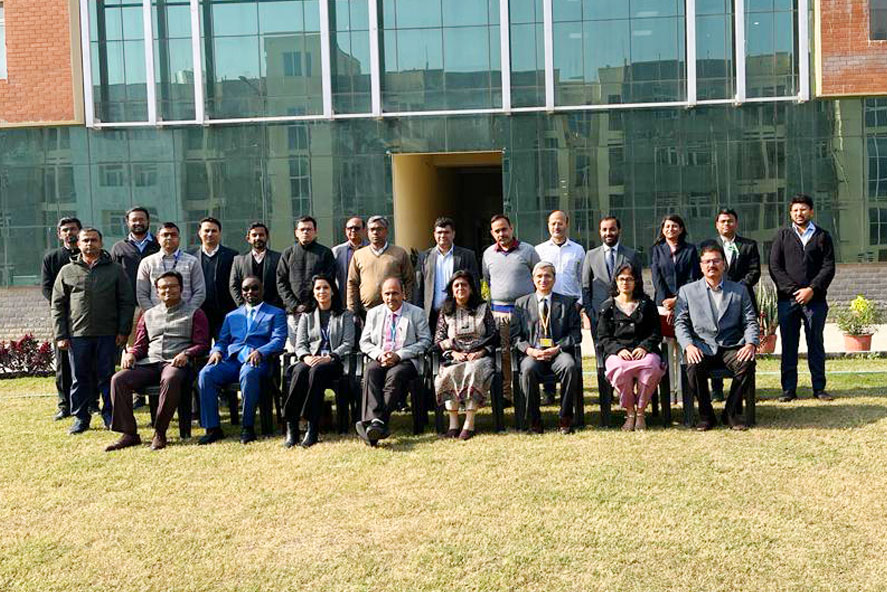
Collectively, these impact–focused activities have strengthened the ability of regulators and technical specialists to address emerging challenges in national spectrum management and radio frequency monitoring. Notable achievements include the SMS4DC training for participants from ten Pacific Island countries, spectrum management audit training for more than 50 officials in Indonesia, foundational spectrum management training for over 30 technical staff in Brunei Darussalam, and satellite regulation training for over 30 participants from nine Southeast Asian countries. By supporting Regional Radio Seminars over the years, delivering tailored workshops on frequency allocation, and organizing seminars on satellite and space connectivity with the International Think Tank for Landlocked Developing Countries (ITTLLDC), the ITU’s Telecommunication Development Bureau has helped administrations prepare for emerging technologies and promote the harmonized use of radio frequencies as a national resource. The 2025 ITU-ITTLLDC Seminar, delivered through close collaboration between the ITU Regional Offices for Asia and the Pacific and for the Commonwealth of Independent States , brought together participants from both regions to exchange practical experience on sustainable space connectivity, cross-border RF interference mitigation, early warning dissemination, and affordable international connectivity for landlocked developing countries.
Beyond individual country interventions, the ITU’s Telecommunication Development Bureau has strengthened regional dialogue and knowledge exchange by contributing to WRC-23, Asia Media Summit, ASEAN regulatory programmes, APT technical meetings, academia, especially through expertise–based engagements in Converged Telecommunications Policy and Regulation (CTPR) Masterclass and specialized forums on satellite communications, digital broadcasting, spectrum economics, and spectrum monitoring. These activities have enabled developing countries to engage more effectively in regional and global spectrum discussions while promoting greater alignment with international best practices.
Looking ahead, the demand for spectrum is expected to grow in the region to support advanced terrestrial wireless solutions, managing utility infrastructure in a smart city, expanding satellite-enabled connectivity, emergency and early warning alerts, and passive imaging, among others. This means that the need for efficient and advanced AI-supported national spectrum management and RF monitoring will increase. It is expected that continued support under the Asia Pacific Regional Initiative will help Member States strengthen spectrum governance, modernize regulatory frameworks, implement WRC outcomes, and integrate emerging technologies into national connectivity strategies.
Spectrum management is often invisible to end users, yet it is one of the most powerful enablers of universal connectivity. The ITU’s Telecommunication Development Bureau will continue to work with its membership to strengthen spectrum governance, modernize regulatory frameworks, implement WRC outcomes to transform this critical resource into tangible development outcomes, creating the conditions for inclusive, resilient, and sustainable digital futures across the region.
This is an ITU Development #BDT4Impact story